Updated March 6th, 2026
As we progress through 2026, the metal fabrication market continues its rapid transformation fueled by smart manufacturing technologies, evolving economic conditions, and shifting customer demands. This updated analysis explores the latest market trends, technological advancements, and strategic considerations shaping the industry today.
Market Growth and Economic Outlook for 2026
The metal fabrication market is projected to expand at an accelerated pace of approximately 5.5% growth in 2026, driven significantly by the booming data center construction sector and increased demand in electronics and medical devices industries . This outpaces prior year growth rates and reflects the broader digital transformation shaping industrial manufacturing.
Despite ongoing uncertainties and supply chain challenges rooted in global trade tensions and geopolitical factors, manufacturers adapting smart manufacturing strategies demonstrate resilience and agility in their operations. Approximately 75% of metal fabricators continue to identify trade uncertainty as a key operational challenge, underscoring the importance of flexible, on-demand production capacity linked closely to customer orders .
Digital Transformation Investments Intensify
Manufacturers are increasing digital transformation budgets to fuel smart manufacturing adoption. About 80% of manufacturing leaders plan to allocate 20% or more of their continuous improvement budgets to smart manufacturing initiatives in 2026 .
Investment focuses include:
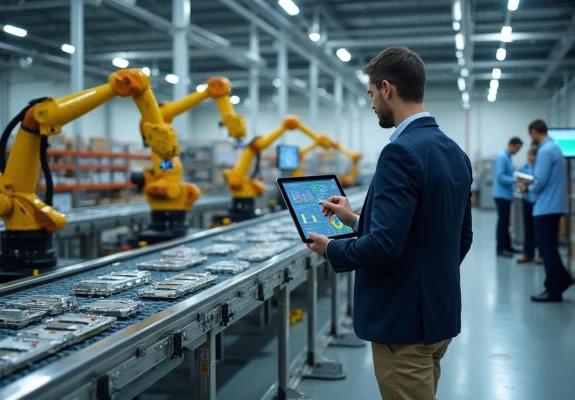
- Advanced automation and robotics
- AI-powered predictive analytics and quality control
- Integrated Internet of Things (IoT) sensor networks
- Cloud computing and data management platforms
This investment prioritization aligns with three primary operational objectives: maximizing production output, boosting workforce productivity, and expanding manufacturing capacity to meet changing customer demands efficiently.
Key Technological Advancements in 2026
The emergence of agentic AI marks a pivotal advancement in smart manufacturing, enabling systems to autonomously optimize complex processes without rule-bound automation constraints .
Other notable technologies influencing metal fabrication include:
- AI-driven supply chain resilience: Automated supplier switching and procurement adjustments in response to market disruptions.
- Digital twins: Virtual replicas enabling real-time simulation and optimization of production lines, predicted to be a $125.7 billion market by 2030 .
- IoT integration: Deploying sensors for comprehensive real-time monitoring of equipment performance and quality metrics.
- Advanced robotics and automation: Increasing adoption of autonomous robots to enhance precision and reduce manual intervention.
Challenges Facing the Industry
Manufacturers face several critical hurdles as they deepen adoption of smart manufacturing:
- Workforce skill gaps: 85% of manufacturers expect smart manufacturing initiatives will attract new talent, yet talent maturity currently lags behind technology deployment .
- High upfront costs: While ready-made analytics deliver an average ROI of 140%, initial capital expenditures can be prohibitive for smaller firms.
- Cybersecurity risks: 55% of firms cite unauthorized system access as a pressing concern, with intellectual property theft risks close behind at 47% .
- Data management: Managing and extracting actionable insights from the voluminous 2 petabytes of industry data generated annually remains a core challenge.
Strategic Recommendations
To capitalize on 2026 market growth and technology trends, metal fabricators should:
- Invest in modular pilot projects: Demonstrate quick wins with smart manufacturing applications before scaling enterprise-wide.
- Focus on workforce development: Prioritize training and upskilling programs to bridge the talent gap.
- Enhance cybersecurity protocols: Implement robust operational technology security frameworks aligned with industry best practices.
- Leverage digital twins: Use simulations to identify and resolve bottlenecks early, reducing costly disruptions during production.
- Adopt flexible on-demand production models: Align manufacturing closely with real-time customer orders to reduce inventory risks.
Conclusion
2026 presents a watershed moment for metal fabrication. Those companies embracing smart manufacturing technologies like agentic AI, digital twins, and IoT-enabled automation will drive substantial productivity gains, operational flexibility, and market leadership.
However, success requires strategic investment, workforce readiness, and strong cybersecurity measures. With thoughtful implementation, metal fabricators can transform challenges into competitive advantages, ensuring sustainable growth amid evolving market conditions.
By leveraging data-driven insights and emerging technologies, the industry is poised for continued expansion beyond 2026, supporting dynamic sectors such as data centers, medical devices, and advanced electronics manufacturing.