
If you run a small or midsize job shop or metal fabrication operation, you’ve probably felt it firsthand: the economy doesn’t need to collapse to create chaos on your shop floor. A few months of shifting material costs, inconsistent demand, labor pressure, or customer schedule changes can be enough to turn “profitable work” into margin erosion—quietly, job by job.
That’s why job costing deserves your attention. Not as an accounting exercise. As an operating discipline.
In stable markets, many shops survive with “good enough” estimates and a rule-of-thumb margin target. In volatile markets, the same approach gets punished quickly—because small misses compound:
- A quote that’s slightly light on setup time.
- A job that needs extra outside processing.
- A material yield assumption that doesn’t hold.
- A rush shipment you didn’t plan for.
- A labor rate that changed, but your costing model didn’t.
The scary part isn’t just that you lose money. It’s that you often don’t know you’re losing money until it’s too late—after the job is shipped and invoiced.
The real point of job costing: control, not paperwork
When job costing is done well, it becomes a loop:
- Estimate consistently
- Run the job and capture actuals
- Analyze variance (where you won or lost)
- Feed that learning back into quoting
That loop is what helps shops protect margins when costs fluctuate and jobs get more complex. It’s how you stop guessing and start managing.
And for job shops and fabricators, it matters even more because you’re dealing with high variability every day: mixed part volumes, different materials, changing routings, outside processing, and the reality that “one weird job” can swing the month.
Why consistent quoting breaks down in the real world
Most quoting inconsistency isn’t because your estimators aren’t capable. It’s because the process lacks structure:
- Two estimators use different assumptions for setup or handling time.
- An engineer builds a routing that doesn’t match what actually happens on the floor.
- Material costing is treated differently depending on whether the shop buys per-job or from stock.
- Outside processing gets added informally (or not at all).
- The shop changes how it runs the job midstream—but the estimate never gets updated.
That’s why the combination of standardized process + software that enforces repeatable costing logic is so powerful. It’s not about “more data.” It’s about creating a single source of truth your team can trust.
Where MIE Trak Pro stands out for job shops and metal fabrication
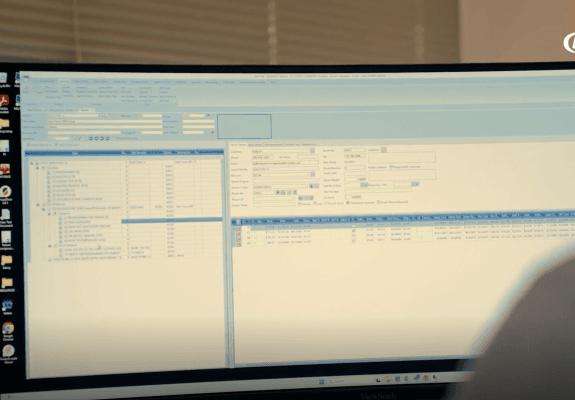
A lot of ERP products can store costs. Fewer are built to help job shops operationalize job costing in a way that fits real manufacturing workflows. MIE Trak Pro was designed around that reality: labor collection at the operation level; material issuance tied to work orders; and costing that stays meaningful while the job is still in motion—not weeks later when the accounting period closes.
Here are a few strengths that matter specifically for job shops and fabricators:
1) Job costing that’s truly “all-in”
Shops lose margin in the gaps: outside processing, consumables, handling, and the “little extras” that don’t get captured consistently. MIE Trak Pro is built to cost jobs in a complete way—labor, material, overhead, and outside processing—so you’re not flying blind on the cost drivers that most often drift.
2) Estimated vs. actual vs. quote—so you can learn, not just report
The most valuable job costing conversation isn’t “What did it cost?” It’s: “Why was it different than we expected?”
When you can compare estimated, quote-based assumptions, and actual results side-by-side, variance becomes actionable. You can see whether your issue is quoting discipline, routing accuracy, shop execution, or job changes—and you can fix the right thing.
3) Better costing for real shop-floor labor scenarios
Job shops don’t have one universal labor rate. Different operations behave differently (and some equipment is partially unattended). When your costing model reflects the way the floor actually runs—different work centers, different labor assumptions—you get more reliable margins and fewer surprises.
4) Practical overhead handling without making it a maintenance nightmare
Smaller and midsize shops need accuracy, but they also need a system they can maintain. The best costing structure is the one your team will keep current. MIE Trak Pro supports structured overhead and rate calculations in a way that can be precise without becoming brittle.
5) The “basic activities” that create outsized operational impact
Here’s the part many manufacturers underestimate: the biggest improvements often come from doing a few fundamentals consistently:
- quoting with repeatable assumptions
- capturing labor at the right level
- issuing material to work orders reliably
- tracking outside processing as a true job cost
- reviewing variance and updating estimating logic
In volatile economies, these basics create an advantage. They let you price faster and more confidently, choose better work, reduce “surprise losses,” and make staffing decisions based on contribution—not gut feel.
Why we’re investing in customer education, not just software
We believe job costing is too important to treat as a checkbox. That’s why we actively help customers build the discipline behind the numbers—through training, support, and webinars that focus on fundamentals, not just screens and clicks.
To start 2026, we hosted our first customer webinar of the year on Wednesday, January 28, 2026, focused on Job Costing & Estimating. In that session, Don Clutter, Co-Founder of MIE Solutions, shared why accurate production estimating can be the difference between success and failure in today’s highly competitive manufacturing landscape.
What made the session especially valuable is that it wasn’t framed as “here’s what our software does.” It was framed as: “Here’s how profitable shops think about job costing—then here’s how you put that thinking into a repeatable process.”
If you’re interested in seeing what a closed-loop quoting and job costing process looks like in practice, MIE Trak Pro is designed for exactly that reality.