The Results That Matter
Small manufacturers face a choice: continue bleeding money on inefficient operations or invest in discrete manufacturing ERP software that delivers measurable returns.
Three-year returns of 300% aren’t just possible—they’re predictable when you reduce inventory by 30-38%, boost efficiency by 18%, and cut manual errors by 52% through automation.
Five metrics tell the real story: cost savings, inventory turnover, production efficiency, order fulfillment time, and error reduction. Track these to see where your money goes and where it comes back.
Real-time visibility separates winners from strugglers – only 16% of manufacturers have this capability today, which means massive opportunity for those who act.
Speed matters more than perfection – 8-week implementations with immediate results beat drawn-out projects every time, with 90% of companies capturing inventory benefits within twelve months.
Calculate ROI over three years using this formula: (Total Benefits – Total Costs) / Total Costs × 100, including every implementation and ongoing expense.
Success comes down to one thing: identify your biggest cost drains before you buy anything, then choose discrete manufacturing software built for your specific workflows instead of trying to force-fit generic solutions.
Most mid-sized manufacturers spend nearly 30% of their annual budget fixing inefficiencies that drain resources and slow production. What’s the real problem? Maintaining outdated discrete manufacturing software costs just as much as implementing a new system, yet delivers none of the benefits. Legacy ERP systems hide expenses that erode profitability while manufacturers focus on day-to-day operations instead of long-term solutions.
This guide shows you how small manufacturers achieve 300% ROI through discrete manufacturing solutions, examines real case studies with documented results, and provides practical guidance for calculating and maximizing your discrete manufacturing software investment.
What Discrete Manufacturing Software Actually Does—And Why ROI Matters
Discrete Manufacturing ERP: Purpose-Built for Your Business
Discrete manufacturing ERP software manages businesses that produce distinct, countable items like machinery, electronics, tools, and furniture. Unlike process manufacturing, which handles bulk production using formulas, discrete manufacturing tracks components and assemblies through bills of materials, work orders, and inventory movement.
Your operation faces unique challenges that generic business software simply can’t handle. Engineering teams need to define product structures, production managers must schedule complex jobs, purchasing has to manage material requirements across multiple orders, and finance teams track costs down to individual job level.
The difference lies in specialized capabilities: multi-level bill of materials management, production scheduling that accounts for real-world constraints, inventory tracking that follows components through assembly, quality control monitoring, supply chain coordination, and financial reporting with accurate job costing. These systems handle version control of components, demand forecasting, dynamic routing and scheduling, plus serial number and lot tracking—features that matter when you’re managing discrete products rather than bulk commodities.
If you want to see how these capabilities come together in a single platform, explore our ERP for discrete manufacturers.
Small Manufacturers Need ROI Clarity More Than Anyone
Your investment decisions carry more weight than those at larger companies. Finance leaders must protect margins, improve cash flow, reduce risk, and maintain strong controls while production pushes for faster output, shorter lead times, and stronger delivery performance.
This tension becomes critical in low-volume, high-mix environments where variability drives costs higher when problems aren’t visible early enough to respond. The gap between planned operations and actual performance creates profit leakage through wasted material, lost capacity, inaccurate job costs, and avoidable schedule disruptions.
ROI analysis cuts through the uncertainty by quantifying both short-term and long-term benefits. Research shows cloud solution deployments deliver 4.01 times the return compared to on-premise deployments. More than 50% of small and midsize businesses reported a 150% increase in ROI.
When you combine ROI discipline with discrete manufacturing software designed for job shops and make‑to‑order manufacturers, you get a clearer path from operational improvements to financial results.
Breaking Down the 300% Return Target
This benchmark represents realistic results for small manufacturers following proven implementation approaches. Companies achieve returns as high as 30% per year from their ERP investments.
Here’s the math in practice: benefits totaling $2,000,000 against investment costs of $575,000 over the same period calculate as ($2,000,000 – $575,000) / $575,000 = 2.479. This 2.5 ratio translates to 250% ROI. When total benefits reach $2,500,000 against $1,000,000 in total costs over five years, the calculation yields 150% total ROI or 30% average annual ROI.
Real examples prove these numbers work. Manufacturers using Acumatica see 66% ROI within three years, $1.40 million in net present value, and a 16-month payback period. These results come from measurable cost savings, higher productivity, and improved inventory accuracy in just over a year.
Typical payback periods run 2 to 5 years, with 20-30% annual ROI considered strong performance. Positive ROI shows up as reduced operating costs, increased labor efficiency, improved data quality and decision-making processes, plus greater customer satisfaction that translates into higher revenues.
For manufacturers evaluating options now, our discrete manufacturing software page walks through the core workflows that drive these savings—from quoting to scheduling, MRP, inventory, quality, and reporting.
Tracking the Right Numbers: Metrics That Reveal True ERP Impact
The difference between manufacturers who achieve substantial returns and those who wonder where their investment went comes down to measuring what matters. These five metric categories show exactly where discrete manufacturing software generates real financial impact.
Cost Savings and Operational Efficiency
ERP systems reduce operational costs by 23% while cutting administration costs by 22%. These reductions happen when you eliminate redundant workflows and connect operations that used to work in isolation. When production changes affect inventory, purchasing, or scheduling, the system alerts every department instantly, allowing smart adjustments that cut costs without sacrificing performance.
Manual data analysis disappears as the biggest time drain on your teams. Without an ERP solution, businesses spend hundreds of hours each month gathering and analyzing information that should flow automatically. Discrete manufacturing ERP software handles repetitive processes and labor-intensive tasks, freeing your workforce for higher-value activities while reducing unnecessary labor costs.
To see how this looks in a real system, review the workflow overview on our discrete manufacturing software pillar page.
Inventory Turnover and Working Capital
For most manufacturers, inventory ties up 25% to 30% of working capital. ERP implementation cuts inventory holding costs by 26% to 31% and reduces total inventory costs by approximately 28%. Production accuracy jumps 35% across major manufacturing sectors.
Inventory turnover reveals how efficiently you convert stock into sales. The calculation divides cost of goods sold by average inventory. Days inventory outstanding shows how long current stock will last at current sales rates, helping balance cash flow with service levels. Manufacturers using demand planning solutions reduce inventory while maintaining or improving customer service, freeing cash to fund growth rather than warehouse space.
Production Efficiency and Output Metrics
Overall Equipment Effectiveness combines availability, performance, and quality into one score. Best-in-class manufacturers approach 85% OEE, while many discrete manufacturers operate between 60% and 75%. Small improvements in this range create meaningful financial gains.
ERP-driven automation boosts operational efficiency by 31% and cuts production downtime by 26%. First Pass Yield tracks the percentage of units completed without rework or repair. Quality failures consume up to 30% of manufacturing revenue, making FPY essential for reducing waste and shortening lead times.
Order Fulfillment Time and Customer Satisfaction
On-time delivery improves by 24% with ERP systems. Manufacturers process up to 30% more customer orders using the same resources after implementing discrete manufacturing erp software. Order cycle time measures duration from placement to delivery, directly affecting customer satisfaction and repeat business.
Perfect order percentage examines your likelihood of taking orders correctly, allocating inventory immediately, delivering on time, and sending accurate invoices. The median perfect order probability stands at 90%. Best-in-class operations achieve 99.8% for orders ready to ship on schedule.
Error Reduction and Quality Control
ERP-driven automation reduces manual errors by 52%. Order picking accuracy reaches 99.8% in best-in-class companies. Quality management software reduces errors while creating continuous improvement across your operation.
Defect density compares defective products to total volume. Poor quality costs 10% to 15% of operational expenses on average. Manufacturing quality control software catches defects earlier, reducing data transcription time and automating manual QC tasks.
Small Manufacturers Getting Results: Real Numbers From the Shop Floor
Small manufacturers with tight budgets and lean teams prove that substantial returns aren’t just for Fortune 500 operations. These companies implemented discrete manufacturing software and tracked actual financial impact within months.
If you see your own operation in these stories, it may be time to look at ERP built specifically for discrete manufacturers and how it could impact your shop over the next three years.
Materials Manufacturer: 38% Inventory Drop, 18% Efficiency Jump
A materials manufacturer dealing with typical growth pains deployed cloud ERP and measured results throughout year one. Inventory levels dropped 38%, freeing up working capital that had been tied up on warehouse shelves. Production efficiency improved 18% as real-time visibility eliminated bottlenecks and sharpened scheduling accuracy.
Labor costs fell 13% without cutting workforce. Workers stopped hunting for information and fixing errors, redirecting hours toward value-added tasks. Revenue climbed 8% during the same period, driven by faster order fulfillment and improved on-time delivery. Customer satisfaction increased 22% as the company consistently met commitments.
Finance Team Transformation: 30% Time Recovery
Omega Industries faced a problem many manufacturers recognize—manual processes consuming finance team capacity. After implementing erp discrete manufacturing, the company cut manual tasks by 30%, allowing employees to focus on strategic work instead of data entry. Daily finance entries that once required hours now take minutes.
Quarterly inventory and payroll processes shifted from two-day marathons to near-instant completions. Industry research shows finance teams typically reclaim 30% to 40% of working time by automating routine tasks. For a 10-person back-office team, that equals three to four full-time employees freed for higher-value analysis.
Eight-Week Implementation: Immediate Impact
Armanino Aerospace selected Microsoft Dynamics 365 Business Central and finished implementation in eight weeks. The QuickStart methodology connected financials, sales, supply chain, and operations into a single cloud platform. Real-time data access became available across every department, improving compliance tracking and decision-making speed.
Fast implementation creates value sooner. Research covering 183 companies found 90.9% realized inventory benefits within a year of implementation, while 77.7% achieved productivity and efficiency gains in the same timeframe.
Success Patterns That Repeat
Barrett Distributors saw product availability increase 14% within six months, coupled with a 38% sales jump requiring only a 16% increase in focused investment. The company reduced excess stock by over $500,000, shifting cash from warehouse shelves to the bank account.
What happens across the industry? 63.9% of manufacturers realized labor and operations benefits within the first year, while 76.2% reported better supplier interactions in the same period. Manufacturing companies achieved supply chain benefits at a 90% rate, demonstrating consistent discrete manufacturing erp software value across sectors and company sizes.
What Actually Drives Returns: The Features That Matter
Which ERP capabilities separate manufacturers who hit 300% ROI from those who simply automate existing problems? The difference comes down to four core features that address your biggest operational pain points.
Real-Time Inventory Visibility and Management
Your inventory represents 25% to 30% of working capital, yet most manufacturers operate blind to what’s actually on their shelves. Real-time visibility into inventory levels across all locations enables proactive replenishment to maintain adequate stock levels. Warehouse management systems that integrate barcode or RFID tracking streamline order fulfillment, reduce errors, and improve throughput. This foundational system gives teams real-time visibility into available stock and its exact location.
Here’s the opportunity: only 16% of manufacturers currently have real-time visibility into their production processes. Discrete manufacturing erp software resolves this gap by creating a live, interconnected ecosystem spanning the entire operation. From raw materials to finished goods, everything is tracked in real time, helping eliminate stockouts, shrinkage, and overordering. Barcode-level traceability ensures inventory counts remain current, enabling just-in-time manufacturing and reducing carrying costs.
Automated Production Scheduling and Planning
Manual scheduling kills efficiency. Production scheduling software incorporates all requirements and delivery demands, analyzing information to determine the optimal schedule that meets customer demands while optimizing production priorities. The result brings demand-driven on-time delivery, accurate and timely production planning, optimized use of available resources including material, labor, and equipment, plus reduced cycle times.
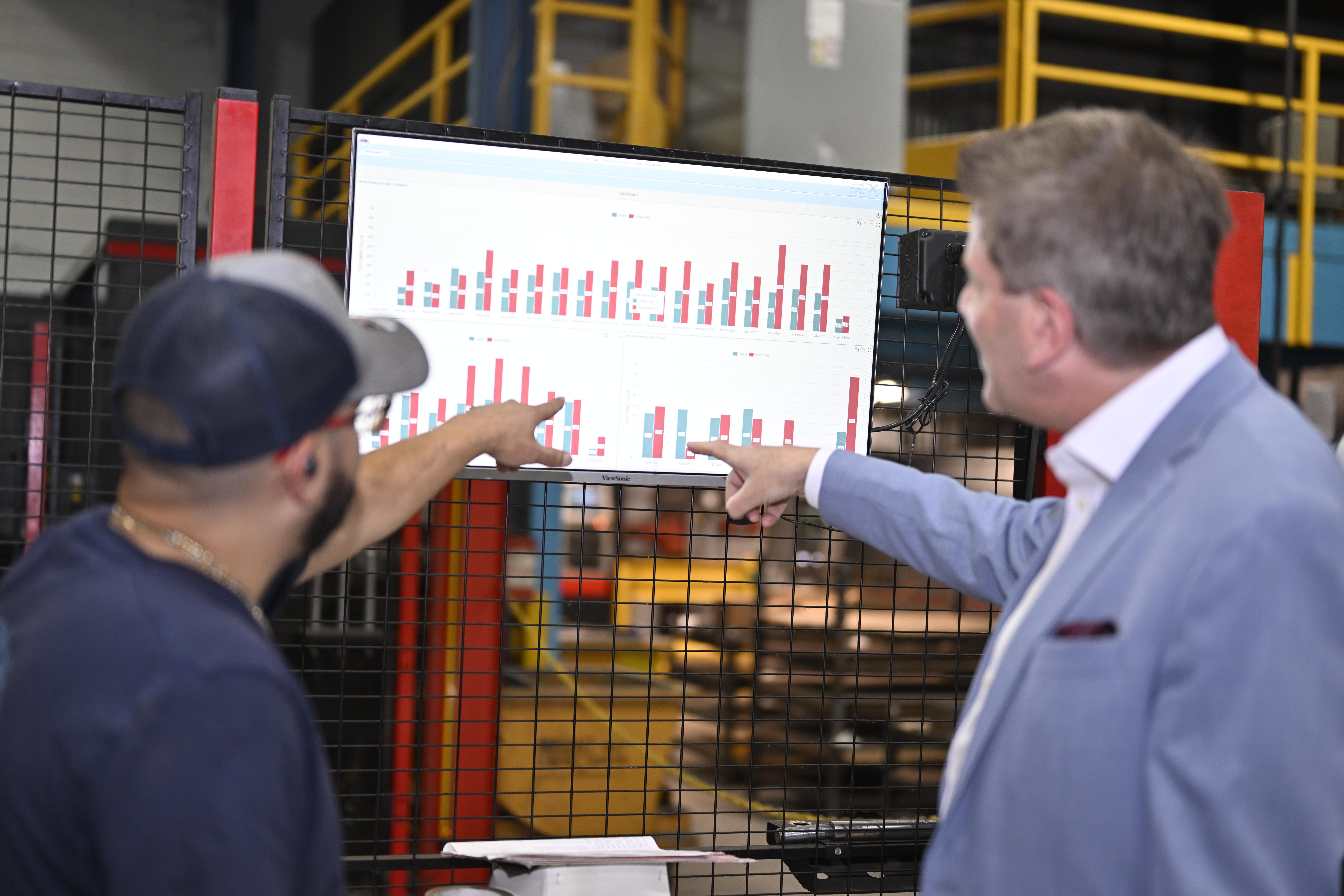
Dynamic production dashboards enable managers to shift resources, manage capacity, and eliminate bottlenecks based on real-time data. Work orders trigger automatically, and machines integrate directly into the planning process. This automation reduces manual scheduling errors while providing clear visibility into current progress, upcoming work, and potential delays.
Integrated Quality Control and Compliance Tracking
Quality problems consume up to 30% of a manufacturer’s revenue. ERP systems improve visibility of processes, allowing manufacturers to optimize quality management. Automated checks and inspections set up alerts, with results automatically recorded in the system for a reliable audit trail. Test and inspection results can be recorded accurately, maintaining an audit trail while identifying trends.
Built-in quality control and compliance tracking tools ensure manufacturing processes adhere to established guidelines. Automated compliance tracking reduces the risk of violations and helps maintain product integrity.
Smart Procurement and Supply Chain Coordination
Purchase order creation shouldn’t require hours of manual data entry. ERP systems help forecast procurement requirements, create pre-filled purchase orders in one click, manage supplier relationships, and compare terms and reliability. Integration capabilities seamlessly connect to existing ERP systems, decreasing manual tasks and improving accuracy. When procurement tools integrate with ERP, organizations reduce time-consuming data entry while eliminating human error.
Calculate Your ERP ROI and Avoid Costly Mistakes
Start with the Right Formula
ROI calculations determine whether your discrete manufacturing software investment makes financial sense. Use this formula: ROI = (Total Benefits – Total Costs) / Total Costs × 100.
Total costs include software licensing, implementation fees, training expenses, ongoing support, and any temporary productivity losses during transition. Benefits split into tangible gains like labor savings and faster reporting cycles, plus intangible improvements such as better decision-making speed.
Plan for a minimum three-year view to capture the full impact, as ERP value compounds over time. For example, if your discrete manufacturing software delivers $1,200,000 in benefits against $800,000 in costs, your ROI calculation becomes ($1,200,000 – $800,000) / $800,000 = 50%.
Find Your Money Drains First
Manufacturing cost drivers fall into material costs, direct labor and overhead, factory-related expenses like energy and maintenance, plus administrative costs including management and IT support. Pinpoint where your operation bleeds money before implementation. This baseline determines which ERP capabilities deliver the highest returns for your specific situation.
What’s eating your profits? Manual data entry consuming finance team hours? Inventory sitting on shelves because you can’t see what’s actually available? Production delays from scheduling conflicts? Target these pain points first—they become your ROI drivers.
Implementation Reality Check
Manufacturing software implementations typically range from 3 to 12 months depending on system complexity and company size. Smaller manufacturers with simpler systems complete installations in 3 to 6 months, while mid-sized operations require 6 to 9 months. Expect 3 to 6 months of active post-launch support before the system stabilizes.
Fast implementations deliver faster returns. Companies completing deployments in 8 weeks start capturing benefits immediately, while lengthy projects often lose momentum and exceed budgets before delivering value.
Choose Software That Fits Your Reality
Before committing to any erp discrete manufacturing system, evaluate production mode support for your specific workflows, scalability as you grow, deployment flexibility matching your IT strategy, integration capability with existing systems, user experience and training accessibility, total cost of ownership beyond licensing fees, vendor support ecosystems, and compliance management for regulated operations.
Match the system to your business, not the other way around. Job shops need flexible scheduling capabilities. High-mix manufacturers require robust bill of materials management. Understanding your operational priorities guides software selection better than feature checklists.
Dodge the Common Traps
More than 70% of ERP implementations fail to reach their original business case goals. Discrete manufacturing projects specifically face a 73% failure rate with average cost overruns reaching 215%. Common mistakes include underestimating total cost of ownership, ignoring change management requirements, failing to define success metrics early, and over-customizing the system.
Success comes from preparation, not perfection. Define clear success metrics before implementation begins. Resist the temptation to customize everything—use the system as designed first, then modify only what’s absolutely necessary for your unique processes.
Conclusion
Discrete manufacturing ERP software delivers measurable returns when you track the right metrics and follow proven implementation practices. As demonstrated through the case studies, achieving 300% ROI isn’t reserved for large enterprises. In fact, small manufacturers consistently see inventory reductions exceeding 30%, efficiency gains around 18%, and payback periods under two years.
Before selecting a system, identify your biggest cost drivers and establish clear success metrics. The difference between manufacturers who achieve substantial returns and those who struggle comes down to preparation, realistic expectations, and choosing discrete manufacturing software aligned with your specific operational needs.
Frequently Asked Questions
For discrete manufacturing ERP implementations, companies typically achieve returns between 150% to 300% over three to five years. Small and mid-sized manufacturers often see annual ROI of 20-30%, with some achieving returns as high as 30% per year. The median payback period ranges from 16 months to 2 years, depending on implementation complexity and company size.
The basic ROI formula is: (Total Benefits – Total Costs) / Total Costs × 100. Total costs include software licensing, implementation fees, training, ongoing support, and temporary productivity losses. Benefits encompass both tangible gains like labor savings and inventory reductions, plus intangible improvements such as faster decision-making. Use a minimum three-year timeframe to capture the full impact.
Manufacturing ERP systems primarily reduce costs in four areas: material costs through better inventory management, direct labor and overhead through automation and efficiency gains, factory-related expenses like energy and maintenance through optimized scheduling, and administrative costs by eliminating manual data entry and streamlining finance operations.
Implementation timelines typically range from 3 to 12 months depending on system complexity and company size. Smaller manufacturers with simpler requirements usually complete installations in 3 to 6 months, while mid-sized operations require 6 to 9 months. Expect an additional 3 to 6 months of post-launch support before the system fully stabilizes.
The features that deliver the strongest returns include real-time inventory visibility and management, automated production scheduling and planning, integrated quality control and compliance tracking, and smart procurement with supply chain coordination. These capabilities reduce inventory holding costs by 26-31%, improve production efficiency by 18-35%, and cut manual errors by up to 52%.