Key Takeaways
Mastering job pricing transforms your shop from average to exceptional. Here’s what you need to know to price jobs accurately and win more work:
• Top-performing shops achieve 70% quote-to-book ratios versus 51% for average shops by using data-driven pricing instead of “eyeball guesstimates” that erode margins.
• Calculate true costs by including hidden expenses: Add 30-38% to base wages for benefits and taxes, factor in freight and storage for materials, and separate fixed from variable overhead.
• Build your shop rate systematically: Combine burdened labor rate plus overhead cost per hour, then apply markup for owner compensation and profit goals to reach your final sell rate.
• Leverage historical data and quoting software to eliminate inconsistencies—geometric estimating engines generate accurate quotes in under 90 seconds, and first responders win 78% more work.
• Add 5-10% contingency buffers to standard projects (20-60% for complex work) and continuously track actual versus estimated costs to refine your pricing accuracy over time.
The difference between profitable growth and leaving money on the table comes down to systematic pricing. Implement these strategies, track your results, and watch your estimation accuracy become a true competitive advantage. The ability to price a job accurately separates the best shops from the rest. Top performers achieve a 70% quote-to-book ratio, while average shops sit at just 51%. Yet most job shops rely on spreadsheets or what’s called an “eyeball guestimate” to price their work. So money slips away on orders that cost more than predicted.
Your fabrication quotation process can become a competitive advantage rather than a liability with smart estimation strategies and analysis of metal fabrication costs. In this piece, we’ll show you how to calculate accurate job prices that protect your margins while winning more work.
Understanding Your Cost Components
Every accurate fabrication quotation starts with three fundamental cost categories that shape your pricing foundation. Direct material costs represent the raw materials and components embedded in your finished product. These expenses extend beyond the base price of steel, aluminum, or other materials. You must account for freight-in charges, storage fees, packaging materials, and indirect taxes paid on purchases. To cite an instance, if you purchase oak boards at USD 4,500, add 10% tax at USD 450, subtract a 5% bulk discount of USD 225, then include USD 300 for freight and storage plus USD 175 for packing, your actual direct material cost becomes USD 5,200.
Direct labor costs include wages for employees involved in production, but the true expense runs deeper. Payroll taxes and employee benefits add 30% to 38% to base compensation in manufacturing. When you calculate your burdened labor rate, include Social Security, Medicare, unemployment insurance, health insurance, retirement contributions, paid time off, and overtime differentials.
Manufacturing overhead splits into fixed and variable components. Fixed overhead costs like rent, insurance, property taxes, and supervisor salaries remain constant whatever the production volume. Variable overhead costs such as utilities, production supplies, and equipment energy consumption fluctuate with output levels. A toy manufacturer producing 10,000 units monthly with USD 15,000 in variable overhead faces USD 1.50 per unit, doubling to USD 30,000 when production reaches 20,000 units.
How to Calculate Shop Rates and Sell Prices
Your shop rate represents the hourly cost required to keep production running profitably. Calculate your burdened labor rate first: add total annual labor costs, taxes, benefits and paid time off, then divide by total annual hours worked minus breaks and training time. This gives you direct labor cost per hour.
Calculate overhead cost per hour next. Sum all fixed costs like rent, utilities, equipment leases, insurance and software. Divide this total by estimated billable hours for the year to get your overhead rate per hour. To cite an instance, if annual overhead reaches USD 500,000 and you estimate 30,000 machine hours, your overhead rate equals USD 16.66 per hour.
Add your direct labor rate and overhead rate together to determine your base shop rate. A typical shop rate for a machine costing USD 100,000 runs about USD 150 per hour. A different calculation method divides gross sales minus materials by work days, production employees and direct man hours per day. Take this example: USD 100,000 minus USD 25,000 divided by 20 days, 4 employees and 8 hours equals USD 117 per hour.
Apply markup to cover owner compensation and profit goals. Calculate markup as one plus owner’s salary, benefits and earnings goal divided by annual service hours, then divide by your combined costs. This creates your final sell rate that customers pay.
Estimation Strategies to Improve Accuracy
Accurate estimation requires moving beyond guesswork toward analytical decision-making. Historical project data provides the foundation for reliable quotes when you track completed job costs against original estimates. Compare past labor hours, material expenses and production rates to identify patterns in your bidding. A central database of finished work helps spot consistent underestimation areas and refine future pricing therefore.
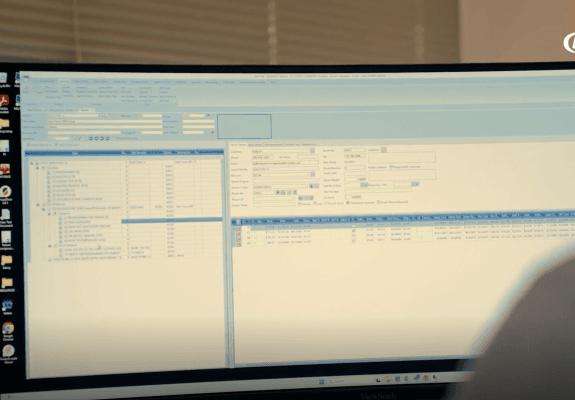
Specialized quoting software eliminates the inconsistency that comes from relying on spreadsheets or individual estimator memory. The strongest systems should handle drawing-based quoting, machine pricing rules and repeat part libraries with secondary process pricing. Parts quoted before can be saved and reused, so returning customer work doesn’t require rebuilding estimates from scratch each time. Geometric estimating engines can generate accurate time and cost calculations in under 90 seconds. This matters because you are 78% more likely to win work as the first responder.
Build contingency reserves into every quote to cover material price fluctuations, schedule delays and unanticipated resource needs. Standard practice adds 5-10% for typical projects, though unique or high-technology work may require 20-60% buffers. Track your actual costs against estimates throughout production to catch budget creep early. This feedback loop changes estimating from static guesswork into a function that improves with each completed project.
Conclusion
You now have everything you need to reshape your job shop pricing from guesswork into a competitive advantage. Accurate cost components and proper shop rate calculations will protect your margins while improving your quote-to-book ratio. Informed estimation strategies complete the picture.
Top performers achieve 70% conversion rates because they price with confidence. Solid numbers back every quote. Implement these methods today and track your results against estimates. Your pricing accuracy will improve with each completed project.
Frequently Asked Questions
Most successful job shops aim for profit margins between 25-35% after accounting for labor, overhead, and materials. While some shops may target higher margins of 45-55%, this can make quotes less competitive. Top-performing shops focus on achieving strong quote-to-book ratios (around 70%) by pricing competitively while still protecting their profitability through accurate cost calculations and operational efficiencies.
No, material and labor typically require different markup approaches. While labor rates should fully account for overhead and profit margins, material markups are usually more modest—typically ranging from 20-30%. Since materials often represent a significant portion of total job costs, excessive material markups can make quotes uncompetitive. The real value in fabrication work comes from the skilled labor and machining expertise, not from reselling raw materials.
Start by determining your burdened labor rate, which includes wages plus payroll taxes and benefits (typically adding 30-38% to base pay). Next, calculate your overhead cost per hour by dividing total annual fixed costs (rent, utilities, insurance, equipment) by estimated billable hours. Add these two figures together to get your base shop rate. Finally, apply markup to cover owner compensation and desired profit. A typical machine shop rate ranges from $100-$150 per hour depending on equipment and location.
The most effective approach combines historical data analysis with specialized quoting software. Track completed job costs against original estimates to identify patterns and refine future pricing. Break down every production step and component rather than relying on rough estimates. Build contingency buffers of 5-10% for typical projects to cover material price fluctuations and unexpected issues. Continuously compare actual costs to estimates throughout production to catch budget overruns early and improve future accuracy.
Every accurate quote must account for three fundamental categories: direct material costs (raw materials, freight, storage, packaging, and taxes), direct labor costs (wages plus payroll taxes and benefits), and overhead costs (both fixed expenses like rent and insurance, and variable costs like utilities that fluctuate with production volume). Missing any of these components will result in underpricing that erodes profitability, even on jobs that appear successful.