Key Takeaways
Machine shops and job shops look similar on the surface,both work with metal, both run machines, both serve customers with tight deadlines. The software requirements, however, couldn’t be more different.
- Job shops face 3-8 equipment changeovers daily, consuming 20-40% of production capacity , without intelligent scheduling software, that capacity loss hits profitability and on-time delivery hard.
- Machine shops need CNC integration and batch optimization, while job shops require multi-project coordination, custom quoting tools, and real-time work-in-process tracking across non-linear workflows.
- Job shop software implementation takes 3-6 months depending on shop size and complexity, with efficiency gains compounding as teams get up to speed.
- Cloud-based solutions and AI-driven scheduling are reshaping both shop types heading into 2026 , early adoption isn’t just an advantage, it’s quickly becoming a baseline requirement.
The core issue is operational complexity. Machine shops standardize around equipment capabilities and predictable workflows. Job shops, on the other hand, must coordinate multiple variables across concurrent custom projects,simultaneously. That distinction is what makes job shop management software not just useful, but critical.
Choosing the right software starts with an honest look at which type of shop you’re actually running. Machine shops specialize in CNC machining with dedicated equipment for batch production. Job shops handle diverse custom work with complex, non-linear workflows. This distinction matters when evaluating job shop scheduling software and machine shop ERP software alike. This article examines how production workflows differ, what features each shop type actually needs, and which one demands more sophisticated software heading into 2026.
Machine Shop vs. Job Shop: Basic Definitions
What Machine Shops Specialize In
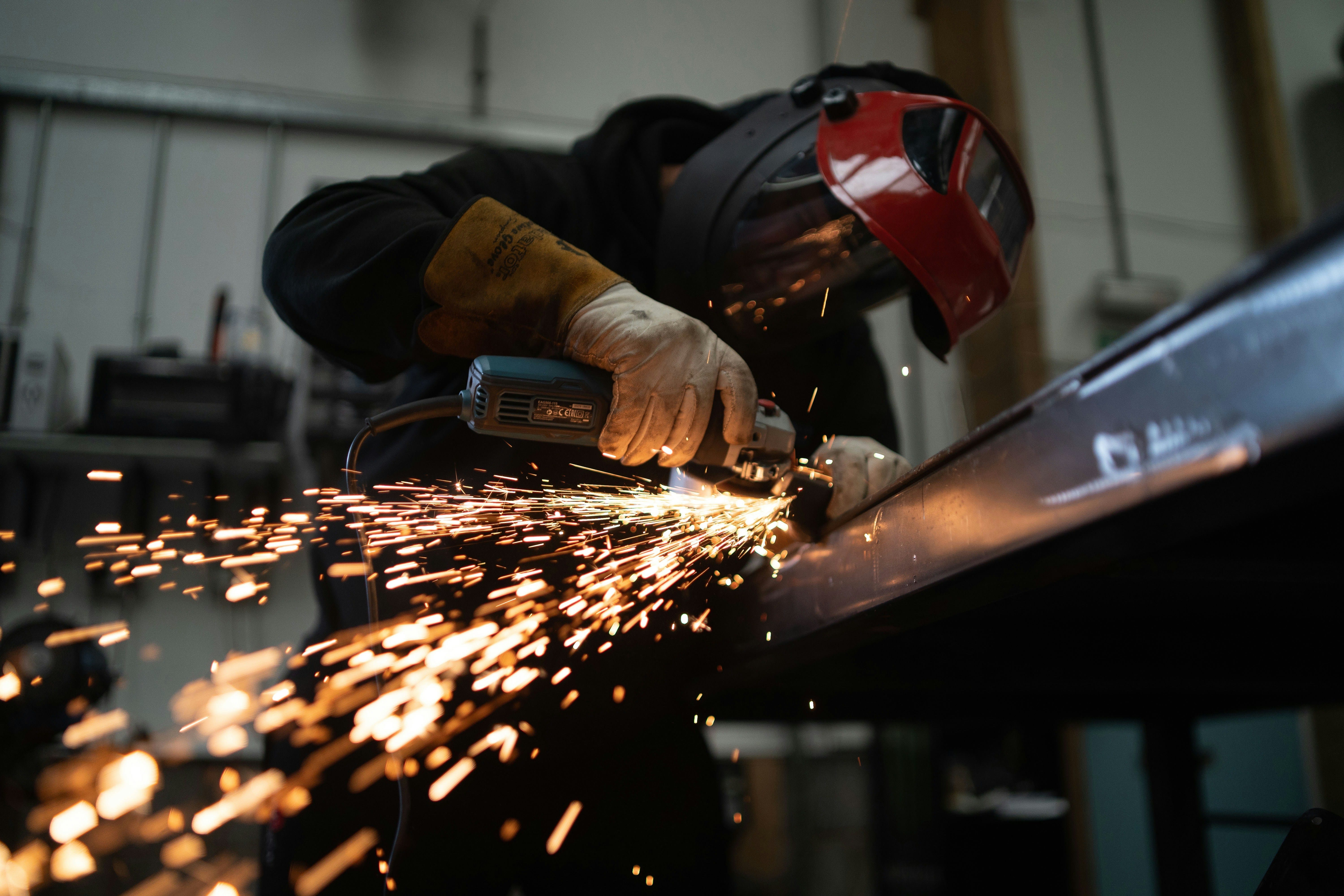
At its core, a machine shop is a facility built around machining. These operations rely on subtractive manufacturing,cutting, shaping, and finishing metal components with specialized equipment. Precision metalworking is the primary focus, achieved through specific machining techniques.
The equipment list reads like a precision engineer’s toolkit: metal lathes, milling machines, machining centers, drill presses, and grinding machines. Most modern facilities depend on computer numerical control (CNC) technology to execute programs that deliver repeatable, exact results. Accuracy and consistency take priority over process variety.
The technical specialization runs deep. Machine shops develop high-level knowledge in machine operation, maintenance, and programming. They excel at producing metal parts from solid stock, setting up complex tooling configurations, and running quality systems backed by integrated inspection equipment.
Production patterns follow a familiar rhythm,repetitive precision machining. The real strength lies in running batches of identical parts. Volumes are higher than general manufacturing, though not at mass production scale. The business model is built around volume work where the same part specifications repeat across multiple runs.
What Job Shops Handle
Make-to-order manufacturers by nature, job shops handle custom or semi-custom manufacturing for small to medium-size customer orders. The scope goes well beyond machining alone. Under one roof, a typical job shop might perform welding, sheet metal bending, fabrication, painting, and assembly.
Flexibility across diverse projects is the defining characteristic. Job shops adapt quickly to shifting customer requirements, managing multiple projects with varying deadlines and complexities. Each order is a unique job,there is no standard product line. Production quantities typically range from one to 100 units per order, with many shops specializing in single-piece production.
The shop floor organizes around operational capability, not product lines. Machinery is adaptable and multi-functional, grouped into areas where specific tasks take place. Rather than dedicated lines for each product, the shop reconfigures equipment to match each job’s requirements.
The workforce reflects this variety. Employees move between machine operation and quality control within the same shift. This skilled labor force reads technical drawings, operates multiple equipment types, and makes production method decisions in real time.
Production begins only after receiving customer orders with specific requirements. That approach keeps inventory carrying costs low,but it demands sophisticated scheduling capabilities. Changeovers happen constantly as machines switch from one product to the next, requiring reconfiguration, settings adjustments, and tooling swaps.
Why the Distinction Matters for Software
Here’s where the operational gap between machine shops and job shops becomes a software problem.
Machine shops need systems that optimize repetitive processes, track tool life across batch runs, and connect tightly with CNC programming. Their workflows follow predictable patterns. Efficiency gains come from streamlining what’s already standardized.
Job shops face a different challenge entirely. Every project follows a different path through the facility. The workflow shifts from day to day, requiring careful planning and resource management to keep different processes functioning equally well. Scheduling software for job shops must coordinate multiple concurrent projects, each with unique routing requirements and custom specifications.
The distinction touches every part of the operation,from quoting to production control. Job shops need flexible estimating tools that accommodate custom materials, designs, and finishes. They need real-time visibility into work-in-process across multiple work centers, where jobs rarely move in straight lines. Machine shops, on the other hand, benefit from systems built for batch scheduling, automated setup time calculations, and volume-based pricing structures.
The software requirements aren’t just different,they’re built for fundamentally different operational realities.
How Production Workflows Differ
Machine Shop: Repetitive Precision Work
Repetitive manufacturing is the backbone of a machine shop. Standardized products move through dedicated equipment in a continuous, predictable flow , one that’s designed to minimize downtime and squeeze out every possible unit of output. Economies of scale kick in, unit costs drop, and product quality improves with each optimized run.
Automation earns its place here. Robots, computer-controlled machines, and assembly lines handle repetitive tasks efficiently, with minimal changeovers required as product variations are incremental rather than dramatic. The entire operation is built around scheduling production to satisfy demand in the least amount of time , making machine shops well-suited for high-volume, consistent work.
Master production schedules keep things running smoothly by mapping out product demand, lead times, and manufacturing capacity. Sequencing ensures products are made at the right time with the right resources, while continuous inspection and data analysis catch defects before they escalate.
Job Shop: Custom Project Management
Job shops work differently , fundamentally so. Every customer order is a distinct project with its own requirements. Unlike an assembly line where products follow a set path, job shop workflows shift significantly from one order to the next. Production only starts once a customer order arrives with specific requirements, which keeps inventory costs low but demands serious project management capability.
Consider what that looks like on the floor. One product might move through cutting, then welding, then finishing. Another might require machining, heat treatment, and then additional machining before it’s done. That routing flexibility lets job shops handle virtually any custom requirement , but it also creates real challenges in material handling and scheduling.
Materials and tooling are managed job by job, and work orders each carry their own routes and quantity tracking. The software holding all of this together must preserve context as work moves between people and processes , tracking designs, revisions, specifications, and customer requests without losing a thread.
Setup Time and Changeover Frequency
Setup time is where the gap between machine shops and job shops becomes impossible to ignore. Flow shops and repetitive manufacturing environments rarely deal with frequent setups. Job shops? Every order may need a different setup , with machines typically changing over 3 to 8 times per day.
Run the numbers and the impact is clear. Setup time can consume 20 to 40 percent of available capacity in a job shop. Take a machine running two shifts: 6 changeovers at 45 minutes each burns 4.5 hours , that’s 28 percent of available capacity gone before a single part ships. When that machine is a bottleneck, setup time doesn’t just slow one operation down. It throttles the entire shop’s throughput.
Now consider what recovering that time is worth. Cutting average setup time from 45 minutes to 25 minutes returns 2 hours of productive capacity per day , enough to run 2 to 4 additional jobs without overtime or capital investment. That’s not a marginal gain. For a job shop running tight margins, it can be the difference between a profitable month and a frustrating one. Job shops depend on skilled workers precisely because the variety of parts, clamps, and tooling swaps demands a higher level of human intervention throughout the day.
Material Flow and Routing Paths
Material flow tells you a great deal about how a shop actually operates. Machine shops maintain linear, predictable paths , products move through workstations in predetermined sequences, much like a highway with clear lanes and exits.
Job shops are organized differently. Rather than linear flow, machines and work centers group by function , all drilling in one area, grinding in another, assembly in a third. Work-in-process moves frequently between departments as each job makes its way through whichever sequence of operations it requires.
The distinction is straightforward: if products move through a consistent path on the same machines on a regular schedule, it’s a production machine shop. If products move from machine to machine based on the job at hand, it’s a job shop. The routing isn’t rigid , it follows the job.
That difference shapes everything downstream, from how the shop floor is organized to what the scheduling software needs to handle.
Critical Software Features for Machine Shops
Machine Shop ERP Software Essentials
Generic ERP tools built for retail or distribution simply don’t address manufacturing realities. Machine shop ERP software must handle variability, custom jobs, and constant scheduling adjustments , and that starts with a system built around how a shop actually runs, not how a warehouse does.
The right system should allow you to build jobs from scratch, support flexible BOMs, and tie routing and materials directly to the work order. Here’s what that looks like in practice:
- BOM and revision control: Multi-level BOMs with revision control and document management for drawings, pushing real-time updates from engineering changes directly to the shop floor.
- Job quoting tied to job costing: Build quotes using estimated labor and materials, then track actuals for margin visibility , including estimates versus actuals and labor variance reporting.
- Integrated MRP and purchasing: Align job demand with part availability and vendor lead times, including dimensional inventory requirements.
- Work order tracking: Status, progress, labor, and materials in one place , giving the shop clear task queues for what to work on next.
- Scheduling and capacity planning: Schedule through available work center capacity with drag-and-drop rescheduling capabilities.
- Barcode-based inventory: Pull parts by scanning to improve accuracy and reduce manual entry errors.
- Real-time shop floor visibility: Capture labor, operation status, completed quantities, scrap, and operator activity as it happens.
Automated Scheduling for Batch Runs
What if batching a production run took less than 10 seconds instead of up to 45 minutes? That’s exactly what auto-batching delivers. The process automatically assigns available order items to production batches using predefined schedule templates , grouping by production group, enforcing capacity rules, and applying sort sequences with a single action.
Advanced modeling of facilities, machines, capabilities, and constraints enables businesses to create effective, accurate, and executable batch schedules. Graphical representations give managers real-time visibility into production run progress in a user-friendly format, with immediate alerts when disruptions or deviations occur.
Scheduling optimization uses advanced production planning tools , often enabled by machine learning , to maximize batch scheduling efficiency, increasing throughput while minimizing costs. Factoring in demand insight from both internal and external customers helps companies closely align their batch production scheduling with current conditions.
Tool Life Tracking and Maintenance
Here’s a problem many shops know well: tools being pulled at 60% of their life, while others fail before the preset even indicates a problem. Every premature change carries a cost , and without proper tracking, tooling becomes a budget line nobody can break down or justify.
A well-configured system addresses this directly:
- Automatic alerts trigger when tool life nears its maximum threshold, continuously optimizing lifespan.
- Digital records are securely stored for convenient future access.
- Detailed logs capture every tool change , who performed it, what was changed, when and where it occurred, and why.
- SPC analysis provides precise tool life expectancy data, optimizes performance, and minimizes costs.
The result: tooling becomes a controllable cost rather than an unpredictable one.
Volume Discount and Pricing Calculations
Machine shops running volume work need pricing structures that reflect how customers actually buy. Volume discounting reduces per-unit prices when customers purchase larger quantities , and the strategy typically relies on tiered pricing where the unit price decreases as quantity increases. Customers must reach a specific quantity threshold to qualify for the discount.
A straightforward example: a business might offer a 10% discount for 100 units, 15% for 500 units, and 20% for 1,000 units. The logic matters here. If only 20% of large customers ultimately purchased while 40% of small customers converted, the large-customer set is more price-sensitive. Applying volume discounts attracts larger, price-sensitive customers without reducing prices for smaller customers willing to pay full rate , protecting margins where it counts most.
Critical Software Features for Job Shops
Job Shop Production Control Requirements
Generic software doesn’t cut it for job shops. The demands are too varied, the workflows too unpredictable, and the stakes too high. Job shop management software must connect every business function,front office operations, manufacturing activities, sales, and customer relations,through a single database. Disconnected systems create the exact kind of data silos that cost shops time, money, and customers.
The right system handles far more than scheduling. It must support:
- Visual routing tools that allow users to create project routings, generate work orders, build schedules, and track engineering changes in one place.
- Labor planning capabilities that check resource availability and drill down into capacity planning details before commitments are made to customers.
- Financial management covering purchase orders, invoices, payments, and financial reports within the same platform,no jumping between systems.
- Manufacturing intelligence that monitors plant performance and reduces losses from poor shop floor execution.
- Production reporting that catches problems before they affect customer deliveries, not after.
- Overall Equipment Effectiveness (OEE) tools that track, analyze, and report equipment performance to keep efficiency targets within reach.
Multi-Project Scheduling Coordination
Here’s the reality most job shop owners know well: around 80% of project teams work on multiple projects simultaneously. Limited resources get shared across those projects. Dependencies between jobs create conflicts when coordination breaks down.
Multi-project scheduling software must handle the full weight of this complexity,concurrent projects, dependency relations among tasks, and restrictions on lead times. Finite capacity scheduling logic takes this further, optimally assigning resources to increase on-time completion and reduce lead times. Without it, the shop floor becomes a constant game of catch-up.
What separates a capable system from a basic one comes down to three things:
- Workload balancing across projects without creating resource overloads that stall progress. – Real-time visibility into all project timelines so managers can see resource availability and utilization at a glance. – The ability to reprioritize jobs quickly when a rush order arrives or a machine goes down.
Custom Quoting and Estimating Tools
Job shops don’t quote from a catalog. Every job is different, and the estimating process has to reflect that. The right software accommodates frequent purchases of special materials and builds schedules around customer jobs rather than forecasts.
A strong estimating function accounts for material, overhead, labor, outsourced operations, commission calculations, and miscellaneous fees,all in one place. Quotes should be built on real-time visibility of true expected costs, with material price comparisons and tooling amortization factored in automatically.
From there, the process should move quickly:
- Automated part file analysis provides setup counts, process-specific feature detection, and manufacturability warnings before estimators finalize numbers. – Once approved, quotes convert into BOMs and sales orders with a single click. – Configuration rules and BOM data tie directly to pricing logic, eliminating the manual rework that eats into estimating time.
Work-in-Process Tracking Across Centers
What’s being made right now? Where is it? Which jobs are stalled and which are ready for the next operation? Without answers to these questions, managing a busy job shop floor becomes guesswork.
Real-time WIP tracking gives managers that visibility. Barcode scans, RFID reads, mobile entries, and connected devices record every movement,receiving, putaway, issuing, production, inspection, packing, and shipping. The system shows which jobs are active, delayed, waiting on materials, or queued for the next work center.
Traceability tools extend this further. Product location, status, and supplier source are trackable and reportable at any moment. Labor entries, material movement, container activity, job status, and traceability records all get captured as work happens,not hours later during a manual update. That level of real-time accuracy is what keeps job commitments credible and customer trust intact.
Software Selection Criteria by Shop Type
Machine Shop: Integration with CNC Systems
CNC integration is where machine shop software either earns its place on the shop floor,or becomes an expensive screen nobody checks. The machine doesn’t know your work orders. The ERP doesn’t know the spindle is running. Bridging that gap is the whole point.
The right software captures real-time machine status, production progress, OEE, alerts, and performance data directly from CNCs,cutting manual entry and giving your team accurate, up-to-the-minute operational visibility. It also synchronizes machine and operator data bi-directionally with ERP or MES platforms, including SAP and Oracle, so your business systems always reflect what’s actually happening on the shop floor.
Protocol compatibility matters more than most shops realize. Fanuc FOCAS, HAAS MNET, Mazak Mazatrol, MTConnect, OPC-UA, Heidenhain TNCremo,these aren’t interchangeable. From 40-year-old serial machines to modern ethernet-enabled CNCs, your platform must handle complex, non-uniform shop-floor data and convert it into reliable dashboards, DNC workflows, ERP/MES synchronization, and analytics. Legacy equipment can’t be an afterthought.
Job Shop: Flexibility and Customization
Job shops require flexible systems to handle variability, custom work, and short lead times. That’s not a vague requirement,it has very specific implications for how the software is built.
The system must allow building jobs from scratch, support flexible BOMs, and tie routing and materials directly to the work order. Visual routing tools let users create project routings, generate work orders, build schedules, and track engineering changes,all while checking resource availability. Quote-to-job workflows, job-based costing, work center scheduling, and real-time production visibility aren’t add-ons for a job shop. They’re the core.
What makes or breaks a job shop software selection isn’t the feature list,it’s whether the system can keep up when three urgent orders land on the same day, priorities shift mid-week, and a customer calls asking for an update on a job that’s halfway through fabrication.
Cost Considerations: License vs. Subscription
The licensing question comes down to how long you plan to use the software,and how comfortable you are with annual price increases.
Subscription-based tools can start modestly. Some core capabilities run around USD 680.00 per year, but separate CAD, CAM, and simulation tools can push costs to USD 6,000.00-USD 10,000.00+ per user annually,with no perpetual license option available. Factor in average B2B SaaS price increases of 5 to 10 percent annually, and the 10-year math becomes harder to justify.
Perpetual licensing works differently. One-time license models typically cost USD 25,000.00 to USD 35,000.00 upfront, with updates included. The break-even point arrives around year three. Over a 10-year period, the total cost picture shifts significantly: USD 25,000.00 for a perpetual license versus USD 150,000.00 for a subscription-based system.
Neither model is universally better. The right choice depends on your growth plans, IT infrastructure, and appetite for upfront investment.
Implementation Speed and Learning Curve
Implementation timelines shift based on the size and complexity of your operation. Small job shops with 5 to 25 employees typically go live within 3 to 4 months. Mid-size operations with 25 to 100 employees should plan for 4 to 6 months. The number of work centers, depth of data migration, and how complex your existing processes are will all influence where you land in that range.
The learning curve follows a predictable pattern: each time cumulative output doubles, average time per unit drops to roughly 80 percent of what it was before. Users without technical backgrounds often face a steep initial phase lasting from a few days to a few weeks,but the efficiency gains that follow make that investment worthwhile. The key is committing to proper training from day one, not treating it as an afterthought once the system is live.
The Verdict: Software Complexity Analysis 2026
Machine Shops: Standardized Needs
Machine shops run on predictability. Their workflows center on repetitive precision manufacturing, and their software needs reflect that reality. CNC integration, tool life monitoring, and volume pricing calculations cover the core requirements. These shops gain the most from systems built around efficiency in standardized operations , not systems designed to handle constant variability and exception management.
That doesn’t make their software unimportant. It just means the complexity bar is set at a different level.
Job Shops: Complex Variable Requirements
Job shop manufacturing is a different challenge entirely. Producing custom, low-volume parts creates real difficulties in tracking orders, scheduling resources, and managing inventory. The dependencies between tasks, equipment, staff skills, and available inventory are intricate , and they shift constantly. No two jobs follow identical paths. Software that works well for a machine shop will struggle in a job shop environment where non-linear routing, frequent changeovers, and project-specific costing are the norm, not the exception.
Why Job Shop Management Software is More Critical
The numbers make the case clearly. Setup time alone eats 20 to 40 percent of available capacity. Multiple concurrent custom projects compete for the same machines, the same workers, and the same materials , all at once. Job shop management software exists specifically to handle this: accurate quoting, intelligent scheduling, precise cost tracking, and resource optimization.
Machine shops standardize around equipment capabilities. Job shops must coordinate multiple variables simultaneously, across every active job on the floor. That’s why job shop scheduling software isn’t just helpful , it’s mission-critical for on-time delivery and profitability.
Future Technology Trends for Both
Cloud-based solutions are becoming the standard, giving shops real-time access to production data from anywhere. AI and machine learning are moving beyond buzzwords into practical scheduling and resource allocation tools that actually reduce decision fatigue on the shop floor. What was once considered experimental technology is now finding real footing in manufacturing operations in 2026.
For machine shops, this means smarter batch optimization and predictive maintenance. For job shops, it means scheduling systems that can respond to last-minute changes without derailing everything else. The shops that adopt these tools early won’t just keep up , they’ll pull ahead.
Machine Shop vs. Job Shop: At a Glance
The differences between these two shop types touch every corner of operations,from how work flows through the facility to what the software needs to handle on any given day. The table below pulls it all together.
| Attribute | Machine Shop | Job Shop |
|---|---|---|
| Primary Focus | Precision metalworking through specific machining techniques | Custom or semi-custom manufacturing for small to medium-size orders |
| Production Type | Batch production of identical parts; repetitive precision work | Make-to-order manufacturing; unique custom projects |
| Production Volume | Larger quantities, though not mass production scale | 1 to 100 units per order; many specialize in single-piece production |
| Equipment Organization | Dedicated equipment for batch production | Organized by operational capability (work centers); multi-functional and adaptable |
| Workflow Pattern | Linear, predictable paths; continuous flow through dedicated equipment | Non-linear; each job follows a unique path through the facility |
| Process Variety | Emphasizes accuracy and consistency rather than process variety | Handles welding, sheet metal bending, fabrication, painting, assembly, and more |
| Changeover Frequency | Infrequent setup changes | 3 to 8 changeovers per day per machine |
| Setup Time Impact | Minimal (infrequent setups) | 20-40% of available capacity consumed by setup time |
| Workforce Skills | High-level knowledge in machine operation, maintenance, and programming | Switch between tasks; interpret drawings, operate multiple equipment types |
| Material Flow | Products move through workstations in predetermined sequences | Moves between departments as needed; organized around specialized work centers |
| Automation Level | Central role with robots, computer-controlled machines, and assembly lines | Higher levels of human intervention required |
| Inventory Approach | Standard inventory for repetitive production | Minimal inventory; production begins only after receiving customer orders |
| Software Complexity Need | Standardized needs; systems optimized for repetitive processes | Complex variable requirements; mission-critical for day-to-day operations |
| Key Software Features | CNC integration, tool life tracking, volume pricing, batch scheduling | Multi-project scheduling, custom quoting, WIP tracking across work centers, flexible routing |
| Scheduling Requirements | Master production schedules; optimized for standardized operations | Sophisticated project management; coordinate multiple concurrent projects with unique routing |
| Implementation Timeline | Typically shorter due to standardized workflows | 3-4 months (5-25 employees); 4-6 months (25-100 employees) |
| Primary Software Challenge | CNC integration and batch run optimization | Handling complexity and variability across non-linear workflows |
| Quoting System Needs | Volume-based pricing structures | Flexible estimating tools for custom specifications,materials, designs, and finishes |
| Production Control | Continuous inspection and testing; data analysis for early issue identification | Visual routing tools, labor planning, and real-time resource availability checking |
The pattern is clear. Machine shops and job shops are not just different in scale,they are different in kind. That difference shapes every software decision you make.
Conclusion
The software complexity question comes down to operational reality. Machine shops benefit from systems that streamline repetitive processes and integrate with CNC equipment. Job shops, however, face exponentially more complex requirements.
Job shop management software must coordinate multiple concurrent custom projects, handle non-linear routing, manage frequent changeovers, and track work-in-process across diverse work centers. Setup time alone consumes 20 to 40 percent of capacity, making intelligent scheduling mission-critical.
Equally important, cloud-based solutions and AI-driven scheduling will transform both shop types by 2026. The question isn’t whether you need specialized software but rather how quickly you implement it before competitors gain the operational edge.
Frequently Asked Questions
Machine shops focus on repetitive precision work, producing batches of identical parts using dedicated CNC equipment. Job shops handle custom, make-to-order manufacturing with diverse projects that follow unique paths through the facility, requiring frequent equipment changeovers and flexible workflows.
Job shops face greater operational complexity because they manage multiple concurrent custom projects simultaneously, each with unique routing requirements, specifications, and timelines. Their software must coordinate non-linear workflows, handle frequent changeovers (3-8 times per day), and track work-in-process across diverse work centers, whereas machine shops follow more predictable, standardized patterns.
Machine shops require software with strong CNC system integration, automated batch scheduling, tool life tracking and maintenance alerts, and volume-based pricing calculations. The system should optimize repetitive processes and provide real-time visibility into production runs while minimizing downtime between batches.
Setup time consumes 20-40% of available capacity in job shops due to frequent changeovers (3-8 times daily per machine), compared to minimal setup requirements in machine shops where equipment runs longer batches. Reducing average setup time from 45 to 25 minutes in a job shop can recover 2 hours of productive capacity per day without additional investment.
Perpetual licenses typically cost $25,000-$35,000 upfront with included updates, paying for themselves by year 3, while subscription models may cost $680-$10,000+ annually per user with 5-10% annual price increases. Over 10 years, perpetual licensing can cost $25,000 versus $150,000 for subscription-based systems, though subscriptions offer lower initial investment and regular feature updates.