Key Takeaways
Selecting the right manufacturing ERP is a high-stakes decision. Get it wrong, and you’re looking at budget overruns of up to 50% and implementation delays that stretch from months into years.
- Build a weighted vendor matrix to replace subjective vendor comparisons with objective, data-driven decisions using consistent scoring criteria across all evaluation categories.
- Document manufacturing-specific requirements first—BOM management, capacity scheduling, real-time inventory tracking, and compliance needs—before speaking to a single vendor.
- Run scripted demonstrations using identical scenarios for all finalists to enable quantitative comparisons, then validate your top choice through reference checks with similar manufacturers.
- Prioritize requirements into must-haves, value-added, and nice-to-haves with input from cross-functional teams to ensure your matrix reflects genuine business needs rather than preferences.
- Calculate total cost of ownership beyond licensing fees, factoring in implementation scope, customization costs, support levels, and three-year operational expenses before signing anything.
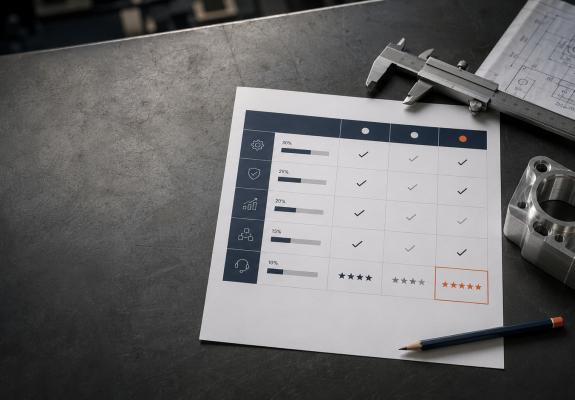
The vendor matrix approach removes the guesswork by assigning weights that total 100% across categories—manufacturing functionality, technical architecture, implementation methodology, and more. The result is a structured framework that ensures the ERP system you choose actually fits your production control, quality assurance, and regulatory compliance requirements.
The selection process alone takes companies six months to a year. Add implementation time of seven months to two years, and the investment—in both capital and resources—is substantial.
That’s why your ERP software selection criteria need to be right from the start. Without a structured process, you risk choosing a vendor that can’t meet your specific manufacturing needs, especially when requirements around production planning, inventory management, and shop floor control get complex.
This guide walks you through how to build a vendor matrix that turns your evaluation into a systematic, repeatable process—so the solution you select is the right one for your business.
What Your ERP Needs to Do Before You Start Talking to Vendors
Before you look at a single vendor demo or request one proposal, you need to know exactly what your operation requires. This sounds obvious—but it’s the step most manufacturers rush or skip entirely. The result? A system that looks great in a sales presentation but falls short the moment it hits your shop floor.
Start with process mapping. Document how work actually moves through your organization—not how it’s supposed to move, but how it really moves. Identify core business functions, existing bottlenecks, and the areas where manual processes are slowing you down. Manufacturing ERP systems are built differently from retail or service-focused solutions. They’re designed around production control, inventory movement, quality assurance, and regulatory compliance—and your requirements need to reflect that.
Gather input from across the organization. Production workers, purchasing managers, executives, customers, suppliers—even former employees. This cross-functional approach surfaces non-negotiable requirements that executives alone would never identify, and it reveals the gap between what’s written in your procedures and what actually happens day-to-day. It’s worth noting that 90% of manufacturers using industry-specific ERP systems report improved productivity and efficiency—but only when the system matches their actual needs.
Your requirements list should cover the following production-specific areas:
– BOM management with version control and engineering revision support.
– Capacity scheduling with both backward and forward planning capabilities.
– Real-time inventory visibility by location and lot number.
– Shop floor data collection through terminals or IoT sensors.
– Embedded quality processes, including inspection plans and non-conformance reports.
Compliance requirements are equally critical and vary by industry:
– Pharmaceutical manufacturers need GMP and FDA validation.
– Chemical producers must address REACH and GHS documentation.
– Food and beverage operations require HACCP or FSMA compliance.
– Aerospace manufacturers must meet AS9100 standards.
Once you have your full list, sort it. Separate must-haves from value-added features and nice-to-haves. Push for consensus across your team—this ensures the final list reflects genuine business needs, not just a wish list from one department. This prioritized requirements list becomes the foundation of your vendor matrix.
Building Your Manufacturing ERP Vendor Matrix
The vendor matrix is your decision-making engine. It takes what could otherwise be a subjective, opinion-driven process and turns it into something you can defend with data.
Organize your evaluation criteria into logical categories:
- Core manufacturing functionality
- Financial management capabilities
- Supply chain and inventory management
- Technical architecture
- Implementation methodology
- Vendor viability
- Total cost of ownership
Each category contains multiple specific criteria, weighted according to your organization’s priorities.
Step 1: Assign category weights
Weights across all categories must total 100%. A manufacturer with complex production requirements might assign manufacturing functionality a weight of 30%, while a distribution-heavy operation would shift emphasis toward supply chain capabilities. The point is simple—what matters most to your business should carry the most influence in your final score.
Step 2: Weight individual criteria within categories
Must-have requirements carry more weight than nice-to-have features. This ensures that a vendor who excels at peripheral functions but falls short on core requirements doesn’t score artificially high.
Step 3: Establish a consistent scoring scale
A five-point system works well:
| Score | What It Means |
|---|---|
| 5 | Full requirement satisfaction with clear strength |
| 4 | Solid capability |
| 3 | Adequate functionality |
| 2 | Partial capability with notable gaps |
| 1 | Significant deficiency |
Document what each score level means for every criterion before you begin evaluating vendors. This reduces subjectivity and keeps your team aligned.
Step 4: Gather information and score
Collect vendor information through RFPs, demonstrations, and reference checks. Score each vendor against your criteria, multiply each score by its corresponding weight, then sum the results to calculate a total weighted score. This method ensures your critical requirements—not peripheral features—drive the final decision.
Using Your Vendor Matrix to Make the Right Decision
Once your weighted scores are calculated, the field narrows—typically to three finalists. That’s when the real evaluation begins.
Scripted Demonstrations
Move quickly to software demonstrations once your initial ranking is complete. The key word here is scripted. Provide each vendor with an identical demo script that outlines specific business scenarios and challenges they must address. Include real sample data—your products, customers, vendors, and pricing—so the demos reflect your actual manufacturing processes, not a generic sales pitch.
This standardized approach removes bias from the equation. Each vendor is graded against the same criteria using demo scorecards, giving you quantitative comparisons rather than gut feelings.
Reference Checks
Rank your finalists from one to three based on demo scorecard results. Conduct reference checks with your top two vendors only—notify the third-place vendor they didn’t advance. Reference calls are not meant to differentiate between finalists; they are meant to affirm your preferred choice. Request references that match your industry, company size, and requirements, and who have been using the system for at least a year. For your top candidate only, arrange a site visit—limit attendees to four people maximum to avoid placing an undue burden on the host company.
Contract Negotiations
Once you’ve confirmed your preferred vendor, begin contract negotiations. Address:
– Licensing terms and data ownership – Implementation scope and customization costs – Support levels and escalation procedures – Three-year total cost of ownership
Document price, responsibility, and timelines for every aspect of implementation and ongoing support. Don’t burn bridges with your second-choice vendor—keep them informed they remain a viable option if negotiations stall. That backup position gives you negotiating leverage and peace of mind.
Conclusion
You now have a proven framework for selecting manufacturing ERP software that eliminates guesswork and reduces implementation risk. Without doubt, building a comprehensive vendor matrix takes effort upfront, but this structured approach saves you from costly mistakes and budget overruns down the road.
Start documenting your requirements today, weight your criteria based on real business priorities, and let the data guide your decision. Your manufacturing operation deserves an ERP system that actually fits your needs.
Frequently Asked Questions
The selection process typically takes six months to a year, followed by an implementation period of seven months to two years. This represents a significant investment of time and resources, which is why getting the selection criteria right from the start is critical.
Manufacturing ERP systems include specialized functionality for production control, inventory movement, quality assurance, and regulatory compliance. They offer features like BOM management with version control, capacity scheduling, real-time inventory visibility by location and lot number, shop floor data collection, and embedded quality processes that aren’t typically found in retail or service-focused solutions.
A vendor matrix is a structured evaluation tool that transforms subjective vendor comparisons into objective, data-driven decisions. It organizes evaluation criteria into logical categories with weighted scores, allowing you to systematically assess vendors against your specific requirements and calculate total weighted scores to identify the best match for your manufacturing needs.
Use a consistent five-point scoring scale: 5 indicates full requirement satisfaction with clear strength, 4 represents solid capability, 3 shows adequate functionality, 2 signals partial capability with gaps, and 1 means significant deficiency. Multiply each score by its corresponding weight and sum these to calculate total weighted scores for each vendor.
Provide each vendor with an identical demo script detailing specific business scenarios and challenges they must address. Include sample company data like products, customers, vendors, and pricing so your actual manufacturing processes are demonstrated. This standardized approach enables quantitative vendor comparisons using consistent grading criteria through demo scorecards.