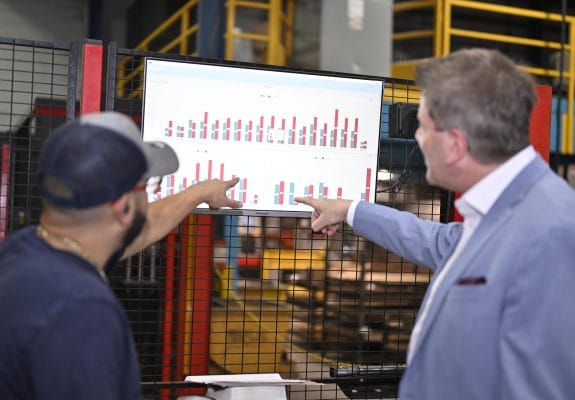
Your manufacturing software works well on its own, but connecting these systems shouldn’t mean replacing everything. Manufacturing today operates at a pace where small inefficiencies can ripple into major delays and rising costs. API integration has become a must-have. In fact, 55% of manufacturers call it critical to their operations. Whether you’re working with an ERP system for manufacturing, manufacturing scheduling software, or inventory management tools, APIs are a great way to get a practical path forward. This piece shows you how to connect your production systems in a smart way, preserving what works while building the integrations you need to stay competitive.
Why API Integration Instead of System Replacement
Cost Comparison: Integration vs. Replacement
Replacing your ERP system for manufacturing carries substantial financial implications beyond the purchase price alone. Modular integration projects can reduce implementation costs by up to 60% across components that include data exchange protocols, billing systems and analytics. Organizations adopting API-led connectivity strategies have documented even more dramatic savings.
The total cost of ownership extends far beyond upfront expenses. Legacy system replacement requires specialized developers, extensive testing infrastructure and ongoing vendor contracts. API integration relies on standardized web technologies and existing development tools, which reduces the need for niche expertise. This architectural difference translates into operational cost reductions between 30-40% when you factor in maintenance, support and future scalability requirements.
Hidden costs widen this gap further. Integration projects that involve legacy manufacturing ERP software often require additional middleware or custom connectors. This adds 20-50% to development budgets. Data quality issues can extend project timelines by weeks or months and create unexpected expenses that many organizations fail to anticipate when budgeting for full system replacements.
Minimizing Operational Downtime
Production interruptions hit hard financially. Manufacturing downtime costs range from $50,000 to $250,000 per hour in lost production and revenue. These figures capture immediate losses only. Hidden expenses include overtime wages for idle workers, emergency IT services at premium rates, accelerated shipping to meet delayed orders and quality control problems that emerge when systems restart.
Full system replacements magnify these risks. Your entire production infrastructure operates in a vulnerable state during cutover periods. API integration allows you to connect systems one at a time and maintain operational continuity while adding new capabilities. Network infrastructure failures, cybersecurity incidents and aging hardware account for approximately 75% of manufacturing IT downtime events. Proactive monitoring and system redundancy can prevent 80% of these incidents. API architectures support this layered approach more effectively than rip-and-replace strategies.
Preserving Employee Knowledge and Training
You discard accumulated employee expertise when you replace your ERP production software. Staff members who have spent years mastering your current systems face unfamiliar interfaces and different workflows suddenly. This knowledge loss extends beyond technical skills. Employees develop informal processes, relationship networks and troubleshooting shortcuts that exist only in their experience, not in documentation.
The exodus of experienced workers during major system changes creates what one operations leader described as an irretrievable break in the knowledge chain. API integration preserves this institutional wisdom. Your teams continue working with familiar tools while gaining access to improved capabilities through connected systems. Cross-training becomes simpler when you’re adding functionality rather than replacing entire platforms. The learning curve flattens considerably.
Maintaining Existing Workflows
Bringing data into your manufacturing scheduling software through APIs supports continuous integration into existing workflows. This approach allows you to append new capabilities to current processes without disrupting how work gets done. You can connect imported data to other automated processes within your software ecosystem and create sophisticated workflows that respond to business needs promptly.
Point-to-point integration attempts often create rigid connections that resist modification. Any system upgrade or replacement requires adapter modifications, and complete redevelopment becomes the only option in some cases. Organizations that chose this path report nervousness about improving or changing existing applications due to integration fragility. API-based connectivity provides pluggable, reusable connections that adapt as your manufacturing inventory management software evolves.
Types of Manufacturing APIs and Their Use Cases
Production Data APIs for Up-to-the-Minute Monitoring
Production monitoring APIs connect shop floor equipment directly to your manufacturing erp software. They capture machine status, production rates, and quality metrics as parts are being made. These APIs work with any device that has data communication capability, such as programmable logic controllers. They update your ERP system with schedule details, finished product counts, and performance data without manual intervention automatically.
You can define which performance parameters to capture for each item or tooling configuration. This gathers job-specific statistics that drive additional processes. This instantaneous feedback covers critical parameters. Total parts created, production time, downtime, scrap counts, and parts remaining to be produced are included. Manufacturers who implement real-time monitoring have reported up to a 20% increase in production efficiency. The data collected makes both immediate insights and system automation possible. You make better decisions faster and drive condition-based maintenance programs using up-to-the-minute machine diagnostics.
Inventory Management APIs for Stock Control
APIs make your manufacturing inventory management software synchronize stock levels across systems of all types automatically. Information stays accurate and current across all platforms. The global inventory management software market reached USD 2.51 billion in 2025. It is projected to grow to USD 2.75 billion in 2026.
These APIs fetch product information. Titles, descriptions, prices, and stock quantities are included. You can adjust stock numbers for individual products or variants. They track goods movement and monitor stock levels across multiple locations. Out-of-stock alerts are provided before depletion occurs. Inventory APIs balance quantities across online stores, marketplaces like Amazon and eBay, and physical locations for multi-channel operations. Oversupply situations are eliminated. Integration guarantees up-to-the-minute synchronization between your inventory management software and stock levels across all channels.
Order Management APIs for ERP Production Software
Order management APIs automate the entire order lifecycle within your erp software for manufacturing industry. These APIs process orders and update inventory levels automatically. Shipping labels are generated without manual data entry. They make automatic reordering possible when stock levels drop below reorder points. Direct connections to supplier systems provide continuous replenishment.
Your erp system for manufacturing can use these APIs to gather live data from sales forecasts, inventory levels, and supplier lead times. Efficient production schedules are created. Order information from retailers flows directly to suppliers through API channels. The rest of the process becomes automatic.
Quality Control APIs for Compliance Tracking
Quality control APIs streamline compliance processes. They integrate your manufacturing scheduling software with quality management systems. These connections generate compliance reports and ensure manufacturing operations meet regulatory standards automatically. The APIs help data exchange for quality metrics, inspection results, and compliance documentation. Manual reporting overhead is reduced while audit trails are maintained.
Supply Chain APIs for Vendor Integration
Supply chain APIs provide up-to-the-minute visibility across manufacturers, carriers, customs brokers, and retailers running on systems of all types. These APIs act as digital connectors instead of manually sending files or relying on batch transfers. Platforms communicate securely and instantly. You can track shipments and update estimated arrival times. Accurate information is shared with customers through APIs that query carrier systems for delivery status. This visibility helps you identify bottlenecks and prevent delays. Resources are optimized based on live information rather than outdated reports.
Building Your API Integration Strategy
Mapping System Dependencies
Dependency mapping identifies, visualizes, and documents how your manufacturing erp software interrelates with applications, services, infrastructure, data flows, and third-party components in your IT ecosystem. You create practical graphs and inventories that answer operational questions in seconds rather than hours instead of relying on outdated documentation or tribal knowledge.
Dependencies exist in vertical and horizontal relationships. Vertical dependencies occur between different component types, where your erp production software depends on a database, which depends on storage infrastructure, which depends on network connectivity. Horizontal dependencies connect similar components at the same architectural layer, such as one microservice calling another or an API gateway routing to multiple backend services. Understanding these patterns helps you identify single points of failure. An outage at the infrastructure layer cascades upward to affect every application when you have a vertical dependency chain.
Organizations should make mapping continuous rather than episodic. Tie it to incident response processes and embed dependency checks in change management to assess effect before approvals. Standardize tags and ownership metadata to enable correlation across data sources. Teams identify blast radius faster during incidents, which decreases mean time to resolution.
Selecting Integration Architecture (Point-to-Point vs. Middleware)
Point-to-point integration establishes direct connections between two systems and accelerates development in the short term because you don’t need to rely on another team. This approach offers simpler data mapping, hassle-free error handling, and faster replication processes. Point-to-point delivers immediate results when connecting just a few systems or smaller applications.
Middleware operates on a different principle. One piece of central software talks to each individual application and translates, reformats, and restructures data as required on the fly. Implementing middleware makes sense when you have bigger and more complex connections with dynamic or changing processes. Middleware maintains information integrity across multiple systems within a network, and it becomes indispensable as your integration needs scale.
Defining Data Synchronization Requirements
Start by mapping current workflows to pinpoint inefficiencies like outdated batch processes or manual data transfers. Document how data flows between systems to identify weak spots. Focus on areas where connectivity could improve, such as teams manually transferring data or struggling with conflicting information between departments.
Determine which systems require two-way synchronization and which only need one-way data feeds. Think about the volume of data you’ll be syncing and know your peak usage patterns. Define performance metrics, whether up-to-the-minute syncing with sub-second latency or minute-level intervals. Your entire integration architecture takes shape from these decisions.
Setting Up Authentication and Security Protocols
Token-based authentication using JSON web tokens eliminates the need for server-stored sessions. OAuth 2.0 issues access tokens with specific scopes in advanced scenarios and ensures only necessary permissions are granted. Multi-factor authentication adds an extra security layer when you have sensitive applications. Rotating and refreshing tokens reduces risks.
Implement role-based access control and assign users the minimum permissions necessary following the principle of least privilege. Use HTTPS to transmit data securely. Avoid weak authentication methods such as basic authentication or API keys placed in HTTP headers, which can be compromised easily. Adopt stronger methods like signed JWTs or certificates instead. Secure credential storage using secrets managers with hardware security modules or cloud key management systems prevents secrets sprawl.
Best Practices for Manufacturing API Implementation
Start Small with Pilot Integration Projects
Select one product family or facility where the effect is concentrated. Instrument the data flow end-to-end and calculate benefits before scaling across your whole operation. Attempting to monitor every endpoint from day one creates unnecessary noise. Focus on APIs that directly affect users or revenue within your erp system for manufacturing instead. This targeted approach lets you verify your integration architecture and identify unforeseen challenges. You build internal expertise before expanding scope.
Document API Endpoints and Data Structures
Detailed documentation promotes long-term maintainability for your manufacturing erp software integrations. Document each endpoint’s URL pattern and available HTTP methods. Clarify the purpose. Include data models with entity types and attributes. Add data types and constraints. Show relationships to other entities. Schema definitions should specify required and optional fields. Include default values and validation rules. Cover response structures for successful responses and error conditions. Add pagination structures and nested object formatting. Your API reference helps developers understand functionality at first. It serves as syntax reference throughout the integration lifecycle.
Implement Error Handling and Logging
Establish a clear structure for error responses across all requests in your erp production software. Keep it consistent. Use descriptive error messages that explain the problem and resolution steps without leaking sensitive information. Document common errors with their meanings and likely causes. Add recommended fixes. Implement centralized logging solutions that funnel logs from individual servers into searchable systems. Logging helps trace API interactions and debug errors, especially those resulting from multiple API calls.
Monitor API Performance and Uptime
API monitoring assesses in-production responses to verify they meet performance measures. Service level agreements often mandate approximately 99.9% uptime or higher. Performance monitoring calculates response time and latency. It tracks throughput and error rates. Combine up-to-the-minute monitoring with periodic testing for detailed coverage of all endpoints in your manufacturing scheduling software. Up-to-the-minute monitoring provides instant feedback and resolves issues before they create service outages.
Plan for Scalability and Future Integrations
Avoid brittle point-to-point integrations that grow exponentially with each new system. Adopt API-first standards that keep systems replaceable as your manufacturing inventory management software evolves. Design flexible architectures where individual services operate independently. Keep them modular. Cloud-based infrastructure supports auto-scaling to handle traffic spikes and growing workloads. Queue minimal work and use backend workers to conserve server resources.
Real-World API Integration Scenarios
Connecting Legacy ERP with Modern Manufacturing Software
API wrappers protect your legacy erp system for manufacturing while exposing functionality to modern applications. RESTful APIs handle master data services and order capture, while SOAP addresses legacy platforms requiring XML messaging and WS-Security authentication. Middleware creates controlled integration layers that standardize message transformation and protocol mediation between systems speaking different languages. To cite an instance, manufacturers running legacy bottling equipment in three plants use edge-to-enterprise models where plant gateways collect equipment data locally and publish normalized events to central integration platforms.
Integrating Shop Floor Equipment with Cloud Systems
Shop floor equipment communicates through protocols like Modbus and Profibus that cloud systems cannot interpret. IIoT gateways translate these industrial protocols into modern formats such as MQTT and HTTP. ShopFloorConnect’s web service-based API receives manufacturing job schedules from your erp production software and reports results back, including job end times and scrap counts. Event-driven middleware with API-based ERP posting supports near-immediate synchronization without overloading your erp manufacturing software.
Linking Multiple Plant Locations Through APIs
API connectivity synchronizes scheduling data, employee information and operational metrics in dispersed locations immediately. Organizations automate data flows between shift management systems and critical applications like HR platforms and payroll systems. This orchestration eliminates duplicate data entry while creating unified operational views at all manufacturing sites.
Connecting Manufacturing ERP Software with E-Commerce Platforms
Orders placed online transfer to your erp software for manufacturing industry, which checks availability, reserves inventory and generates invoices. Products, prices and inventory balances flow from ERP to ecommerce platforms, while orders and customers move in the opposite direction. This two-way exchange keeps storefronts synchronized with operational systems without manual intervention.
Conclusion
API integration offers a practical way forward for manufacturers who need connected systems without the expense and disruption of wholesale replacement. We’ve explored how this approach preserves your team’s expertise, maintains familiar workflows, and saves you 30-60% in costs compared to full system replacements. You also minimize production downtime and build connections that scale with your operation.
Start with a focused pilot project. Document your endpoints with care, implement proper error handling, and monitor performance on a consistent basis. Your existing manufacturing software works well. API integration helps it work better together and creates the connected production environment you need long-term.
FAQs
Q1. How do API connections work between manufacturing systems? An API connection involves a client system sending an HTTP request to a server system according to specific API specifications. The server processes the request and sends back the appropriate data or response, enabling seamless communication between different manufacturing software platforms without manual intervention.
Q2. What cost savings can manufacturers expect from API integration versus system replacement? API integration can reduce implementation costs by 30-60% compared to full system replacements. Organizations using API-led connectivity strategies have documented savings of over £1.6 million by reusing APIs across multiple projects, avoiding thousands of development hours that would be required for individual point-to-point connections.
Q3. How does API integration minimize production downtime? API integration allows manufacturers to connect systems incrementally while maintaining operational continuity, unlike full system replacements that create vulnerable cutover periods. This approach enables you to add new capabilities without interrupting production, which is critical since manufacturing downtime can cost between $50,000 to $250,000 per hour.
Q4. What types of manufacturing APIs are most commonly used? The most common manufacturing APIs include production data APIs for real-time monitoring, inventory management APIs for stock control, order management APIs for ERP systems, quality control APIs for compliance tracking, and supply chain APIs for vendor integration. Each serves specific functions in connecting different aspects of manufacturing operations.
Q5. Should manufacturers use point-to-point integration or middleware for API connections? Point-to-point integration works well for connecting just a few systems with simpler requirements, offering faster initial development. However, middleware becomes essential for larger, more complex operations with frequently changing processes, as it provides centralized data translation and maintains information integrity across multiple systems within your network.